
Post
How to Waterproof a Jacket at Home: Step-by-Step #11
Jun
Over time, even the best rain jacket starts to “wet out,” soaking up water instead of letting it bead and roll off. The good news is you do not need to buy a replacement. Learning how to waterproof a jacket at home restores performance for a fraction of the cost and extends the life of gear you already own.
Why Jackets Lose Their Waterproofing
Most rain jackets rely on a durable water repellent (DWR) finish on the outer fabric, plus a membrane or coating beneath it. The DWR wears off through abrasion, dirt, body oils, and repeated washing. When it fails, the outer fabric absorbs water, the jacket feels heavy and clammy, and breathability drops sharply. The underlying waterproofing may still be intact, but the surface needs reviving.
Step One: Clean the Jacket First
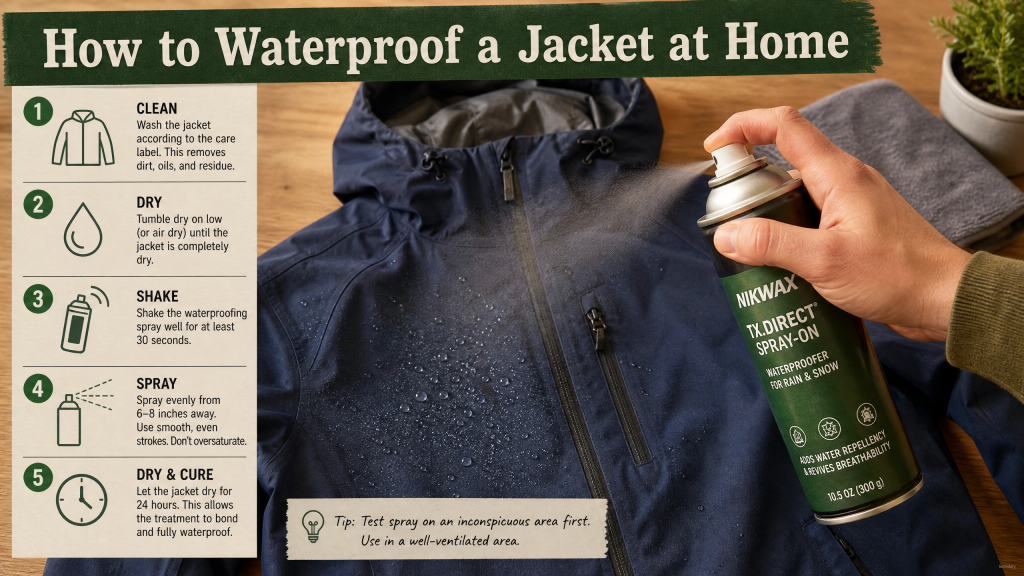
Dirt and detergent residue block water repellency, so always start with a clean jacket. Use a technical wash designed for waterproof fabrics rather than regular detergent, which leaves a film that attracts water. Follow the care label, run a rinse cycle, and avoid fabric softener entirely. A clean jacket lets the new treatment bond properly.
Step Two: Choose Your Treatment
There are two main types of reproofing product: wash-in and spray-on. Wash-in treatments coat the entire garment evenly and are great for general use. Spray-on treatments target the outer face only, preserving the breathability of the inner membrane, making them ideal for high-performance jackets. Pick based on your jacket type and the product instructions.
Step Three: Apply the Reproofing
For wash-in products, add the treatment to the machine and run a cycle as directed. For spray-on products, lay the damp jacket flat, spray evenly across the outer surface, and wipe off excess. Pay extra attention to high-wear areas like shoulders and cuffs, where the original DWR wears off first.
Step Four: Activate With Heat
Most DWR treatments bond best with gentle heat. Tumble dry on low or use a cool iron with a cloth between the iron and fabric, following the care label. The heat helps the repellent set and restores the beading effect. Skipping this step often leaves performance well below its potential.
Reseal the Seams If Needed
If water leaks through stitching rather than the fabric, the seam tape may be peeling. Seam sealant applied to the inside of failing seams restores the barrier. This is more fiddly than reproofing but can rescue an otherwise good jacket whose seams have aged. Let it cure fully before wearing.
How Often to Reproof
Reproof when water stops beading and starts soaking into the outer fabric, usually once or twice a year for waterproof a jacket regular users. Frequent washing, heavy use, and abrasion all shorten the interval. Keeping a spray treatment on hand means you can refresh performance the moment you notice wetting out, rather than enduring a soggy jacket.
When to Replace Instead Waterproof a Jacket
Reproofing revives surface repellency but cannot fix a delaminated membrane or worn-through fabric. If your jacket leaks everywhere even after treatment, waterproof a jacket may be time for an upgrade. When that day comes, browse durable, well-made options in our shop, and keep your old jacket for muddy chores. For background on the garments themselves, see the entry on the raincoat.
Choosing Between Wash-In and Spray-On Products
Home reproofing comes in two main forms, and picking the right one matters. Wash-in treatments go through your washing machine and coat the entire garment evenly, making them ideal for jackets without a separate breathable membrane. Spray-on products are applied directly to the outer surface and are the better choice for technical shells, because they only treat the exterior and leave the breathable inner layer free to work. Using a wash-in product on a membrane jacket can clog its pores, so always check what kind of jacket you own first.
Preparing the Jacket Properly
Reproofing works best on a clean jacket, which surprises many people who assume dirt helps water bead. In reality, oils, sweat, and grime attract water and stop new treatments bonding to the fabric. Wash the jacket first with a dedicated technical cleaner rather waterproof a jacket than ordinary detergent, which leaves residues that harm waterproofing. Once clean, the fabric is ready to accept the new coating evenly. Skipping this step is the most common reason home reproofing disappoints, so never treat a dirty jacket.
The Role of Heat in Activation
Many durable water repellent treatments need gentle heat to bond and become effective. After applying the product, a spell in a cool tumble dryer or a careful pass with a warm iron through a cloth can dramatically improve how well water beads afterwards. Always follow the product and garment instructions for temperature, since too much heat damages technical fabrics. This activation step is easy to forget but often makes the difference between a treatment that works brilliantly and one that barely helps.
Knowing When Reproofing Is Not Enough
Reproofing restores the surface water repellency, but it cannot fix a worn-out membrane or failed seam tape. If water is leaking through specific seams or the inner coating is visibly flaking and peeling, a surface treatment will not solve the problem. At that point you can waterproof a jacket patch seams with seam sealer or accept that the jacket has reached the end of its waterproof life. Learning to tell the difference saves you from wasting product on a jacket that needs replacing.
Frequently Asked Questions
How often should I reproof my jacket? Reproof when water stops beading and starts soaking into the outer fabric, waterproof a jacket which for regular users may be once or twice a year.
Can I use ordinary fabric waterproofing spray? Use a product designed for technical outerwear; general sprays may not breathe or last. Find suitable jackets and care advice in our shop.
Will reproofing change the colour or feel? Done correctly it should not, though always test on a hidden area first if you are unsure.
Bringing an Old Jacket Back to Life
Reproofing is one of the most satisfying pieces of gear care because waterproof a jacket visibly revives a tired jacket for a fraction of the cost of replacement. Clean the garment first, choose the right product for its construction, apply it evenly, and activate it with gentle heat. Done properly, water beads and rolls off once more, breathability returns, and your jacket feels almost new. Just remember the limits: a surface treatment cannot mend a failed membrane or leaking seams. Build reproofing into your seasonal routine and you will dramatically extend the working life of every waterproof you own. It is a small, green, money-saving habit that rewards a little effort with many more dry, comfortable outings in the rain.
