
Post
Breathable Rain Jacket Explained: Stay Dry Without the Sweat
Jun
Have you ever worn a waterproof jacket only to end up just as wet from sweat? That is the problem a breathable rain jacket solves. By letting water vapour escape while blocking rain from getting in, breathable fabrics keep you comfortable during active use. This guide explains how they work and how to choose one.
The Sweat Problem Of Breathable Rain Jacket
A simple waterproof coating blocks rain but also traps the moisture your body produces. During exertion you sweat heavily, and with nowhere to go that moisture condenses inside the jacket, leaving you damp and chilled. Breathability is the engineering answer that makes a waterproof jacket genuinely comfortable to be active in.
How Breathable Membranes Work
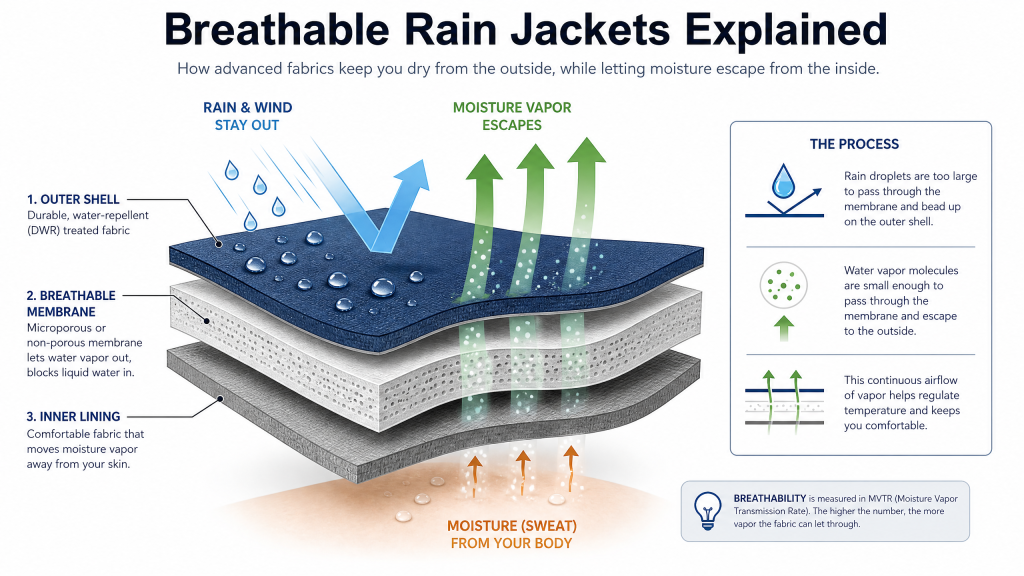
Breathable waterproof fabrics use a membrane with pores far too small Breathable Rain Jacket for liquid raindrops to enter, but large enough for tiny water-vapour molecules to escape. This lets perspiration pass outward while rain stays out. Technologies like Gore-Tex pioneered this approach and remain industry benchmarks.
Understanding Breathability Ratings
Breathability is measured in grams of moisture vapour transmitted per square metre over 24 hours. A figure of 5,000g is adequate for low activity, 10,000g suits moderate use, and 20,000g or more is ideal for high-output sports. Higher breathable rain jacket numbers mean drier comfort during exertion, though they usually cost more.
Membrane vs Coating
Laminated membranes generally breathe better and last longer than simple coatings, which is why premium jackets use them. Coated fabrics are cheaper and fine for low activity but tend to feel clammier when you work hard. Matching the technology to your activity level avoids both overspending and disappointment.
Ventilation Features Help Too
Even the most breathable membrane has limits during intense effort, so mechanical ventilation supplements it. Pit zips under the arms, mesh-backed pockets, and core vents dump heat quickly when you are working hard. Combining a breathable membrane with good venting gives the best real-world comfort across changing exertion levels.
The Role of the DWR Finish
Breathability collapses when the outer fabric “wets out” and saturates with water, because the soaked face blocks vapour from escaping. A working durable water repellent finish keeps the outer fabric dry so the membrane can breathe. Reproofing when water stops beading restores breathability as much as waterproofing.
Matching Breathability to Activity
For casual city wear, modest breathability is fine and saves money. For hiking, running, and cycling, prioritise high breathability and venting over maximum waterproofing. The ideal jacket matches your sweat output, since an over-sealed jacket for a high-effort activity defeats the entire purpose of staying dry.
Choosing Yours
Look at both the waterproof and breathability ratings, the membrane technology, Breathable Rain Jacket and the venting features together. A balanced jacket keeps rain out and lets sweat escape, so you stay comfortable whether you are strolling or sprinting. Explore breathable options across activity levels in our shop and ditch the clammy-jacket misery for good.
How Waterproof Breathable Fabrics Work
It sounds like a contradiction that a fabric can block rain yet let sweat escape, but the science is elegant. Breathable membranes are covered in pores far too small for liquid water droplets to pass through, yet large enough for individual water vapour molecules from your sweat to escape. So liquid rain stays out while perspiration, in vapour form, passes through to the air. This clever physics is what separates a comfortable technical shell from a sweaty plastic-feeling jacket, and understanding it helps you judge the claims on any label.
Membranes Versus Coatings
Breathability is delivered in two main ways. Laminated membranes bond a thin breathable film to the fabric, generally offering the best balance of waterproofing and breathability and the longest life. Coatings are sprayed or painted onto the inner face of the fabric, which costs less but tends to breathe less well and wear out sooner. Knowing whether a breathable rain jacket uses a membrane or a coating helps explain its price and how it will perform, so it is worth checking which technology any given shell relies on before buying.
Why Breathability Ratings Vary
Breathability is measured in several different ways, which is why comparing numbers across brands can be confusing. Some methods measure how much moisture passes through a set area over time, others measure resistance to moisture transfer. Higher breathability is better for active use, but it often trades off against durability or absolute waterproofing. Rather than fixating on a single figure, consider how hard you will work in the jacket: a gentle stroll needs far less breathability than a steep mountain ascent in the same rain.
Helping Your Jacket Breathe Its Best
Even the most advanced fabric breathes poorly if it is dirty or its surface finish has failed. When the outer fabric wets out and stops beading, a film of water blocks vapour from escaping, leaving you damp inside despite the membrane working perfectly. Keeping the jacket clean with technical wash and refreshing the water repellent finish restores both breathable rain jacket beading and breathability. Pairing the jacket with wicking base layers rather than cotton also helps move moisture to the membrane where it can escape, maximising real-world comfort.
Frequently Asked Questions
Why do I still feel sweaty in a breathable jacket? Breathable fabrics have limits and cannot keep up with very high sweat rates; ventilation zips and a clean, well-treated surface help considerably.
Are breathable jackets less waterproof? The best ones combine strong waterproofing with breathability, though very cheap options may compromise one for the other. Compare reliable models in our shop.
Does washing ruin breathability? Proper washing with technical cleaner actually restores it; ordinary detergent and fabric softener are what cause harm.
Getting the Most From the Technology
Breathable rain jackets represent a clever solution to an age-old problem, and understanding how they work helps you choose and use them well. Recognise the difference between membranes and coatings, weigh breathability against waterproofing for your activity level, and keep the fabric clean and well treated so it can actually breathe. Pair it with wicking layers rather than cotton to give the membrane moisture it can move outward.
Used and cared for correctly, a breathable jacket keeps you dry from the rain outside while staying comfortable inside, even during hard effort. It is a genuine advance over the clammy waterproofs of the past, and a little knowledge ensures you experience the comfort the technology was designed to deliver.
