Post
Rain Poncho vs Raincoat: Which Should You Choose? #13
Jun
Rain Poncho vs Raincoat
When the rain starts, you have two classic options: a poncho or a coat. The rain poncho vs raincoat debate comes down to coverage, comfort, portability, and the kind of activity you have in mind. This guide compares both honestly so you can pick the right one, or decide you need both.
The Case for the Poncho
A poncho is essentially a waterproof sheet with a hood, draping loosely over your body and often your backpack too. Its biggest strengths are coverage and ventilation: it shields more of you, including your bag, while the open sides let air circulate freely so you rarely overheat.
The Case for the Raincoat
A raincoat is fitted, structured, and stays put in wind. It offers a cleaner look, better wind resistance, and features like pockets, adjustable cuffs, and sealed seams. For everyday wear, commuting, and windy conditions, a coat usually feels more controlled and presentable than a flapping poncho.
Coverage Compared
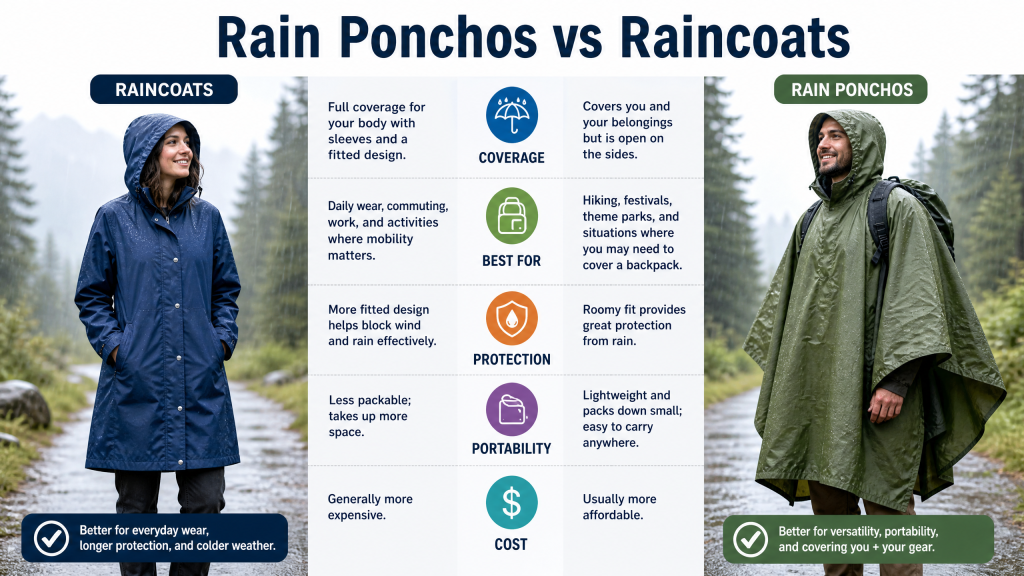
Ponchos win on sheer coverage, draping over your legs and pack to keep more of you dry in still rain. Raincoats cover your torso and arms precisely but leave your legs exposed unless paired with rain trousers. If you carry a backpack, a poncho’s ability to cover it is a genuine advantage.
Wind Performance
Here the raincoat clearly wins. A poncho’s loose, open design catches the wind and can billow or lift, letting rain underneath. A fitted coat with adjustable cuffs and hem seals out wind-driven rain far better. In gusty or stormy conditions, the coat is the more reliable choice.
Breathability and Comfort
Ponchos breathe naturally thanks to their open sides, so you rarely feel clammy. Raincoats can trap heat unless they use breathable waterproof fabric or vents. For hot, humid climates or sweaty activities like festival walking, the poncho’s airflow is a real comfort advantage.
Portability and Value
Lightweight ponchos pack down tiny and cost very little, making them perfect emergency backups to stash in any bag. Raincoats are bulkier and pricier but more durable and versatile for daily life. Many people keep a cheap poncho for emergencies and a quality coat for regular use.
Which Activities Suit Each
Choose a poncho for festivals, hiking with a pack, theme parks, and emergency cover. Choose a raincoat for commuting, dog walks, windy weather, and any time appearance matters. Matching the garment to the activity, rather than forcing one to do everything, is the secret to staying comfortable.
The Verdict
Neither is universally better. Ponchos excel at coverage, breathability, portability, and price; raincoats win on wind resistance, fit, features, and everyday style. For most people the smart answer is owning both, a packable poncho for emergencies and a proper coat for daily wear. Explore both options in our shop and cover every kind of rainy day.
Coverage and Freedom of Movement
The biggest practical difference between a poncho and a raincoat is how they cover you. A poncho drapes loosely over your body and often your backpack too, creating a large sheltered space underneath that keeps your bag and even your hips dry. A raincoat fits closer and follows your shape, sealing rain out more precisely but covering less surrounding kit. If you carry a pack or want maximum airflow on a hot, wet day, the poncho’s generous coverage is hard to beat, while a raincoat wins when you need a trim, secure fit.
Ventilation and Comfort in the Heat
Ponchos are champions of ventilation because air circulates freely beneath the loose fabric, which is why they shine in warm, humid downpours where a sealed jacket would leave you swimming in sweat. The open sides that make them so breathable, however, also let wind-driven rain reach you from below. Raincoats trap more heat but block side rain far better. Think about whether your typical rain comes with heat and stillness, favouring a poncho, or wind and cold, favouring a fitted coat.
Packability and Convenience
Lightweight ponchos fold down impressively small and weigh next to nothing, making them a favourite emergency layer for festivals, theme parks, and travel. Rain poncho vs raincoat. Many cost very little, so keeping one stashed in a bag is painless. Raincoats generally take up more room and cost more, but they feel less flappy and look far tidier for everyday and city use. For grab-and-go backup protection a poncho is unbeatable; for a garment you wear day in and day out, a proper raincoat usually wins.
Which Suits Your Lifestyle
The right choice depends on what you do. Rain poncho vs raincoat. Hikers and backpackers often love ponchos for covering their packs and venting heat, while urban commuters and office workers usually prefer the clean lines and secure fit of a raincoat. Some people sensibly own both: a packable poncho for emergencies and a quality raincoat for daily wear. There is no universal winner, only the option that fits your activities, climate, and sense of style most closely. The traditional poncho has a long heritage precisely because that simple shape works so well.
Frequently Asked Questions
Is a poncho warm enough for cold rain? Not particularly; ponchos vent so much air that they offer little warmth, so layer underneath in cold weather.
Can I cycle in a poncho? Specialised cycling ponchos exist, rain poncho vs raincoat, but loose fabric can catch the wind or wheels, so a fitted jacket is usually safer for riding. Compare both in our shop.
Which is better for festivals? A packable poncho is the classic festival choice, cheap, light, and easy to throw on over everything when the skies open.
Picking Your Rain Companion
Neither rain poncho vs raincoat is universally better; each shines in different circumstances. Reach for a poncho when you want generous coverage over a pack, maximum ventilation in warm rain, or a cheap, packable emergency layer. Choose a raincoat when you want a secure, tailored fit, better protection from wind-driven rain, and a tidier look for everyday and city wear. Many people sensibly keep both, deploying whichever suits the day. Think about your typical activities, climate, and style preferences, and the right choice becomes clear. Whichever you favour, the important thing is having reliable protection ready before the rain arrives, so you are never left scrambling for cover when the first drops begin to fall.
