
Post
Understanding Waterproof Ratings: What the mm Number Means #17
Jun
You have probably seen a waterproof rating mm figure on a jacket tag, like 5,000mm or 20,000mm, and wondered what it actually means. Understanding this single number is the most reliable way to judge how much rain a garment can handle, far more useful than vague words like “waterproof” or “water-resistant.”
What the mm Waterproof Rating Measures
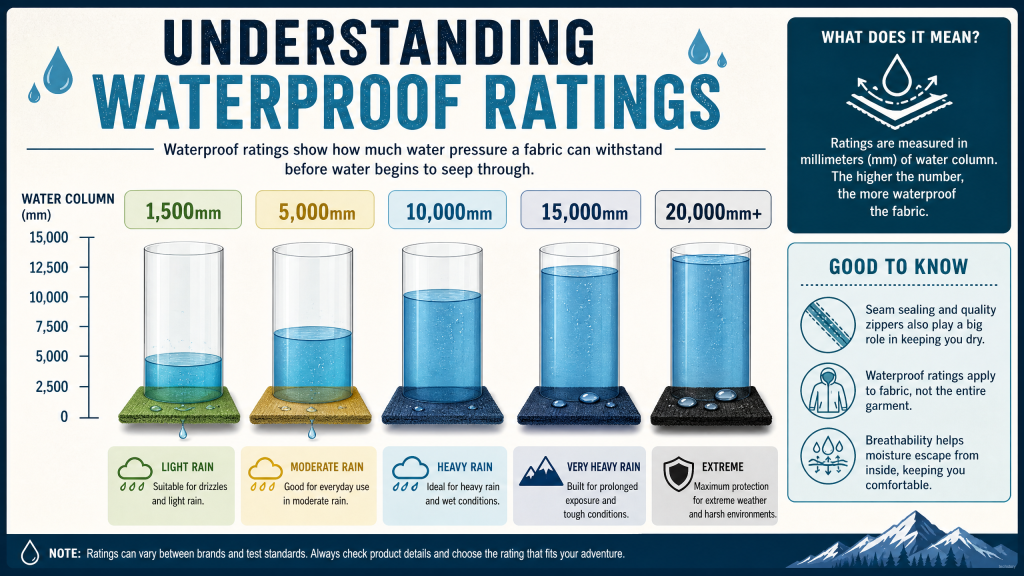
The waterproof rating comes from a hydrostatic head test, which measures how tall a column of water the fabric can hold before water seeps through. A 10,000mm rating means a ten-metre column of water sits on the fabric before it leaks. The higher the number, the more water pressure the fabric resists. It is a core concept in waterproofing.
The Rating Scale Explained
As a rough guide: below 5,000mm offers light water resistance for drizzle; 5,000–10,000mm handles light to moderate rain; 10,000–15,000mm copes with steady rain and light pressure; 15,000–20,000mm withstands heavy rain; and above 20,000mm resists storms and the pressure of backpack straps or sitting on wet ground.
Why Pressure Matters
Water resistance is not just about rain falling; it is about pressure. When a backpack strap presses fabric against your shoulder, or you kneel on wet ground, the local pressure spikes far above gentle rainfall. That is why active and outdoor users need higher ratings than someone strolling under light showers.
The Breathability Connection
A high waterproof rating often pairs with a separate breathability rating, measured in grams of moisture transmitted per square metre per day. The best waterproof fabrics achieve both high waterproofing and high breathability, though this combination raises the price. Cheaper fabrics often trade breathability for waterproofing or vice versa.
Matching the Rating to Your Needs
For everyday city use and short exposure, 5,000–10,000mm is plenty and keeps costs down. For commuting in wetter climates, aim for 10,000mm and up. For hiking, cycling, and serious outdoor use, choose 15,000mm or higher with taped seams. Buying far more than you need wastes money on performance you will never use.
Beyond the Number
The mm rating is vital, but it is not the whole story. Taped seams, waterproof zippers, an adjustable hood, and a quality durable water repellent finish all affect real-world dryness. A jacket with a modest rating but excellent construction can outperform a high-rated one with leaky seams.
Why DWR Still Matters
Even a highly rated jacket needs its outer DWR finish to make water bead and roll off. When the DWR fails, the outer fabric soaks up water, feels heavy, and breathes poorly, even though the membrane still blocks leaks. Reproofing maintains the performance the mm waterproof rating promises.
Shopping With Confidence
Armed with an understanding of the mm rating, you can cut through marketing language and judge jackets objectively. Look at the number, the seams, and the features together. To compare clearly rated options across every level of protection, browse our shop and choose the right jacket for your conditions, not the loudest label.
What the Millimetre Number Really Means
The waterproof rating in millimetres comes from the hydrostatic head test, where a sealed tube of water is placed on the fabric and water is added until pressure forces it through. The height of the water column at that point, measured in millimetres, becomes the rating. A higher number means the fabric resists more pressure before leaking. This gives a repeatable, comparable figure, which is why understanding it helps you cut through marketing and judge how a garment will actually cope when the weather turns serious.
Matching Ratings to Real Conditions
Different activities and weather put very different pressures on fabric. Light rain and everyday use are comfortably handled by lower ratings, while sitting on wet ground, kneeling, or carrying a heavy pack that presses fabric against your shoulders demands a much higher figure. Wind also drives rain harder against the fabric, raising the effective pressure. Rather than chasing the biggest number, match the rating to how and where you will use the garment, since an extreme rating adds cost and often stiffness you may not need.
Why Breathability Sits Alongside the Rating
A waterproof rating tells only half the story, because a fabric that keeps every drop out but traps all your sweat leaves you wet from the inside. Breathability, often measured separately, describes how well moisture vapour escapes. The best technical fabrics balance a high waterproof rating with strong breathability, keeping rain out while letting perspiration pass through. When comparing garments, always consider both figures together, as a very waterproof but poorly breathing shell can feel clammy and uncomfortable during any active use.
The Limits of Lab Numbers
Ratings are useful but not the whole picture, because real-world waterproofing also depends on seam taping, zip quality, the durable water repellent finish, and how worn the garment is. A fabric with an impressive rating still leaks if its seams are untaped or its surface treatment has failed. Treat the millimetre figure as one important clue rather than a guarantee, and look at the construction as a whole. A well-built garment with a moderate rating often outperforms a poorly finished one with a higher number on paper.
Frequently Asked Questions
What rating do I need for everyday rain? A moderate rating handles typical daily showers comfortably; reserve very high ratings for demanding outdoor pursuits and prolonged exposure.
Is a higher rating always better? Not necessarily, since higher ratings can mean stiffer, less breathable fabric and higher cost. Match it to your needs using guidance in our shop.
Why does my high-rated jacket still leak? Usually the cause is failed seam tape, a worn surface finish, or water entering through zips rather than the fabric itself.
Reading Ratings Like an Expert
Understanding the millimetre rating transforms you from a confused shopper into a confident one. Remember that the number reflects a hydrostatic head test, that higher figures resist more pressure, and that you should match the rating to your real activities rather than chasing the biggest number. Always weigh breathability alongside waterproofing, and never forget that seams, zips, and surface treatments matter as much as the headline figure.
With this knowledge you can compare garments meaningfully, spot when a high rating is overkill, and recognise when a moderate rating with excellent construction is the smarter buy. Ratings are a tool, not a guarantee, and using them wisely helps you spend your money where it genuinely improves how dry and comfortable you stay.
