
Post
Waterproof vs Water Resistant Jackets: What’s the Difference? #22
Jun
Waterproof vs Water Resistant Jackets
The phrases get used interchangeably on product tags, but the waterproof vs water resistant distinction has real consequences for how dry you stay. Buy the wrong one and a long rainy walk turns miserable. This guide explains exactly what each term means and how to pick the right level of protection.
What Water-Resistant Really Means
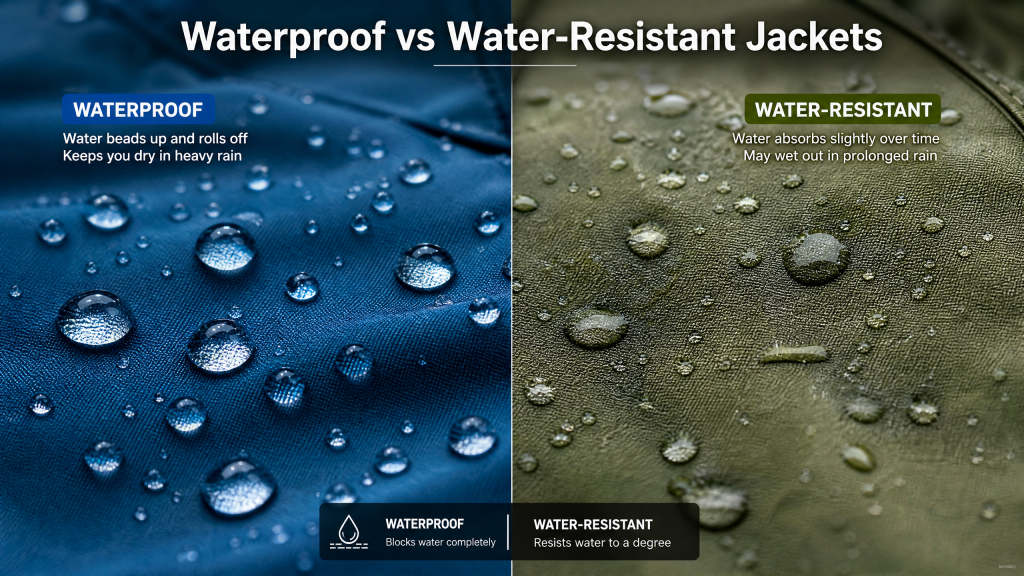
A water-resistant garment can handle light rain, mist, or brief drizzle. The fabric is usually tightly woven or treated with a durable water repellent finish that makes water bead and roll off. However, under sustained or heavy rain, water eventually soaks through, especially at the seams. Water-resistant pieces are great as everyday jackets but should not be your defence in a storm – waterproof vs water resistant.
What Waterproof Means
A truly waterproof vs water resistant jacket uses a membrane or coating that blocks water entirely, combined with sealed seams that stop leaks through the stitching. Manufacturers test this with a hydrostatic head measurement: the higher the millimetre rating, the more water pressure the fabric resists. You can explore the underlying technology in this overview of waterproofing.
Why the Confusion Exists
There is no universal legal standard forcing brands to use these terms precisely, so marketing language varies. Some “waterproof” jackets lack taped seams, while some “water-resistant” jackets perform surprisingly well. The reliable move is to ignore the headline word and look at the hydrostatic head rating and seam construction instead. Numbers do not lie the way adjectives sometimes do.
Understanding the mm Rating
Below 5,000mm is light water resistance. Between 5,000mm and 10,000mm handles moderate rain. Above 10,000mm is genuinely waterproof for most situations, and 20,000mm withstands heavy storms and the pressure of backpack straps pressing fabric against your body. Knowing this single number tells you more than any label adjective ever could.
Breathability and the Trade-Off
Fully waterproof vs water resistant jackets can trap perspiration, which is why breathable membranes like Gore-Tex exist. Water-resistant jackets are naturally more breathable because they are less sealed. For high-output activities you may actually prefer a breathable water-resistant shell, accepting slight dampness in exchange for not overheating. It is a balance, not a simple better-or-worse choice.
Which One Should You Buy?
For commuting, dog walks, and casual wear in mild climates, water-resistant is often enough and tends to be lighter and more comfortable. For hiking, travel in unpredictable weather, or anywhere with frequent heavy rain, invest in a genuinely waterproof jacket with taped seams. Many people own one of each. To see clearly labelled options for both categories, visit our shop.
Maintaining Performance Over Time
Both types rely on a DWR finish that wears off with use and washing. When water stops beading and starts soaking in, the fabric is “wetting out” and needs a reproofing treatment. Regular care keeps a water-resistant jacket performing at its best and stops a waterproof one from feeling clammy. Treating maintenance as routine, not optional, dramatically extends the useful life of either garment.
The Bottom Line
Water-resistant means light protection and high comfort; waterproof means sealed, storm-ready defence. Neither is universally better. Check the mm rating, inspect the seams, and match the jacket to your real-world conditions. For the deepest background, the entry on the classic raincoat shows how waterproofing has evolved over the centuries into the high-tech fabrics we rely on today.
How Manufacturers Test These Claims
The words on a label are backed by laboratory tests that most shoppers never see. Waterproof vs water resistant is measured with a hydrostatic head test, where a column of water sits on the fabric until it begins to seep through; the height of that column in millimetres becomes the rating. Water-resistant garments are often tested with a spray rather than sustained pressure, which is why they cope with a passing shower but fail in a downpour. Understanding that these are two different tests helps explain why two similar-looking jackets perform so differently when the weather turns serious.
Durable Water Repellent Coatings Explained
Many water-resistant jackets rely on a durable water repellent finish, a microscopic chemical treatment that makes water bead up and roll off the surface. This coating wears away with washing, abrasion, and time, which is why an older jacket that once shed rain suddenly seems to soak it up. The fabric underneath has not failed; the surface treatment has. The good news is that this finish can be renewed at home with wash-in or spray-on products, restoring much of the original performance for very little money.
When Water-Resistant Is the Smarter Choice
Fully waterproof vs water resistant does not always mean better for your needs. Waterproof membranes trap more heat and moisture, so for high-output activities in light rain, a breathable water-resistant layer can keep you more comfortable overall. Runners, cyclists, and fast hikers often prefer a water-resistant shell that lets sweat escape rather than a waterproof one that leaves them clammy. Match the garment to the intensity of your activity and the severity of the weather rather than assuming the most waterproof option always wins.
Reading Between the Marketing Lines
Brands use plenty of persuasive language, so learn to look past it. Terms like weatherproof, storm-ready, and all-weather have no fixed technical meaning and can describe anything from a true storm shell to a lightly treated fashion piece. Always look for a specific waterproof vs water resistant rating in millimetres and confirmation that the seams are taped if you need genuine protection. When those details are missing, assume the garment is water-resistant at best and plan accordingly.
Frequently Asked Questions
Is a water-resistant jacket useless in real rain? Not at all, it simply has limits. It handles light, short-lived rain well but will eventually wet through in a sustained downpour.
Can I make a water-resistant jacket fully waterproof? You can improve it with reproofing sprays and seam sealer, but you cannot turn a non-membrane jacket into a true waterproof shell. For guaranteed protection, choose a garment built as waterproof from the start in our shop.
Which lasts longer? Both degrade over time, but the waterproof vs water resistant membrane in a quality shell typically outlasts a simple treated fabric.
Making the Right Choice for You
The waterproof versus water-resistant question has no single right answer, only the right answer for your situation. If you face genuine downpours, sustained rain, or demanding outdoor pursuits, invest in a fully waterproof jacket with taped seams and a clear rating. If you mostly meet light showers and value breathability and comfort during active use, a water-resistant layer may serve you better and feel less clammy.
Many people benefit from owning both and reaching for whichever suits the day. The key is to read past the marketing, understand what the labels really promise, and be honest about the weather you actually encounter. Armed with that understanding, you will never again be caught out by a jacket that promised more than it could deliver.
